
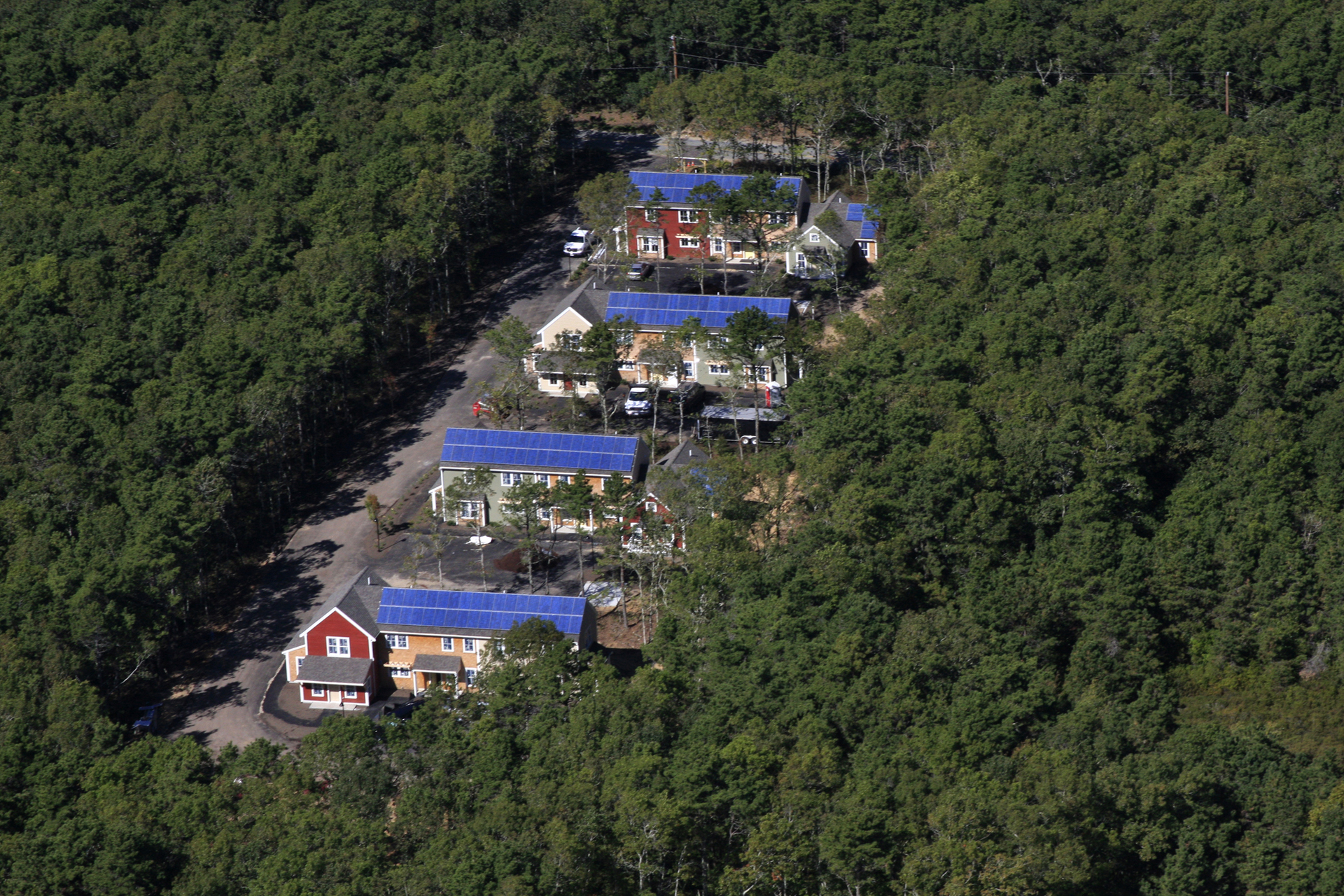
Why It Matters: Federal laboratory simulation models often struggle to reach commercial adoption due to risk aversion among builders and utilities. By pairing federal researchers directly with property portfolios and grid operators, this initiative demonstrates how automated interconnection tools, modular rebuilding envelopes, and multi-family load shedding can resolve grid bottlenecks without sacrificing resident comfort.
A chronic bottleneck in decarbonizing the built environment is the gap between laboratory modeling and physical deployment. Clean building assemblies and grid-responsive controls frequently perform well in controlled simulations, yet commercial owners and regulated utilities often hesitate to adopt them without field evidence. On July 21, 2026, the National Laboratory of the Rockies, operating under the U.S. Department of Energy, and the Wells Fargo Innovation Incubator moved to address this hurdle by announcing four awardees from a 750,000 dollar pooled fund under the IN2 Scalable Tech Track.
Accelerating Commercial Validation
Selected from an initial cohort of nine participating organizations, the four recipients will partner directly with federal technical teams over a six-month deployment window. The cohort includes two major property organizations, Habitat for Humanity of Greater Los Angeles and multi-family developer WinnCompanies, alongside two electric utilities, National Grid and Tucson Electric Power. By embedding national laboratory technical staff and advanced simulation engines into active operational portfolios, the program aims to compress standard multi-year procurement and testing schedules into actionable field validation.
For architects, MEP engineers, and building operators, this structure provides a rare look at how federal analytical tools function under actual commercial constraints. Rather than relying on generic assumptions, researchers will apply building performance modeling platforms such as BuildStock, ComStock, and URBANopt to evaluate mechanical performance, distribution constraints, and thermal dynamics across varied regional climates.
Targeting High-Stress Affordable Housing and Disaster Recovery
Two of the four awards focus specifically on affordable housing, a sector that faces acute capital constraints alongside escalating climate risks. In Southern California, Habitat for Humanity of Greater Los Angeles is collaborating with laboratory researchers to pilot high-efficiency building envelopes and modular construction methods for post-disaster rebuilding following the Palisades and Eaton fires. Project partners assert that these novel modular envelope assemblies can significantly lower construction costs and accelerate delivery schedules for displaced residents, while providing superior passive survivability during extreme heat and grid disruptions.
On the operations side, WinnCompanies is deploying networked building controls across multi-family affordable housing properties to evaluate automated electric load shifting and load shedding. As multi-family properties undergo heating and hot water electrification, their cumulative peak power demand can stress local distribution feeders. By testing dynamic load controls that shed non-critical power without sacrificing tenant thermal comfort, the project demonstrates how affordable residential properties can participate in virtual power plants and relieve local grid infrastructure.
Relieving Utility Feeder Queues and Extreme Heat Pressure
The remaining two awards tackle the electrical distribution constraints that increasingly delay commercial building electrification. National Grid will field-test an automated connection study application designed to evaluate distribution feeder capacity dynamically. In many metropolitan markets, electrification projects, large heat pump installations, and electric vehicle charging hubs face prolonged queue delays while utilities conduct manual feeder capacity studies. National Grid and program leaders claim that automated screening tools can clear interconnection queues faster and avert multi-million-dollar distribution upgrades while preserving network reliability.
In Arizona, Tucson Electric Power is assessing building envelope measures and thermal storage systems within community cooling centers. With municipal cooling facilities facing intense operational stress during sustained summer heat waves, the utility is examining how combining active thermal storage with high-efficiency cooling strategies can maintain safe indoor conditions during peak-demand periods. The pilot provides municipal facility directors with operational blueprints for running emergency shelters without driving peak utility demand charges to unsustainable levels.
Practical Implications for Practice and Delivery
The shared technical thread across all four pilots is the operational convergence of building science and utility network planning. Historically, property developers, architects, and electrical utilities have operated in silos, addressing building efficiency and grid capacity as separate engineering problems. The IN2 Scalable Tech Track demonstrates that physical building retrofits, automated controls, and utility interconnection processes must function as an integrated ecosystem.
For specifiers and engineers, these pilots illustrate that future building designs will increasingly be judged not merely by static energy efficiency metrics, but by their dynamic flexibility. As utilities adopt automated screening and load-management programs, buildings capable of responsive load shedding and thermal retention will secure faster utility approvals, lower operating costs, and enhanced resilience during extreme weather events.
What Professionals Should Know
- Four organizations share a 750,000 dollar fund to field-test federal building technologies across live sites within six months.
- WinnCompanies is testing networked building controls in affordable housing to demonstrate multi-family load shedding for virtual power plants.
- National Grid is evaluating automated screening software to shorten commercial electrification interconnection queues and reduce feeder upgrade costs.
- Tucson Electric Power and Habitat for Humanity are pairing envelope efficiency with thermal storage to harden cooling centers and wildfire recovery housing.
Sources
- Affordable Homes, Cooling Centers, and a Faster Grid? Yes, Please: How 4 Companies Are Working To Bring New Technologies to Communities in Need—With Help From National Laboratory Experts — National Laboratory of the Rockies (NLR) / Wells Fargo Innovation Incubator (IN2)
- Innovation Incubator Program Drives Real-World Impact in Affordable Housing and Electrical Grid Demands — CleanTechnica / DOE
- NLR Buildings Division Hub — National Laboratory of the Rockies
- NLR News Archive — National Laboratory of the Rockies
- WinnCompanies Corporate Portal

.jpg)